The Complete Blood Count (CBC), also referred to as a Complete Hemogram, is the most frequently ordered and clinically foundational laboratory test in modern medicine. It provides an exhaustive quantitative and qualitative evaluation of the cellular components suspended in your blood plasma: erythrocytes (red blood cells), leukocytes (white blood cells), and thrombocytes (platelets). Whether ordered as part of an annual health checkup, pre-operative screening, or to investigate symptoms of chronic fatigue, dizziness, or fever, the CBC serves as an essential diagnostic window into hematological, immunological, and systemic health.
What Is a Complete Blood Count (CBC)?
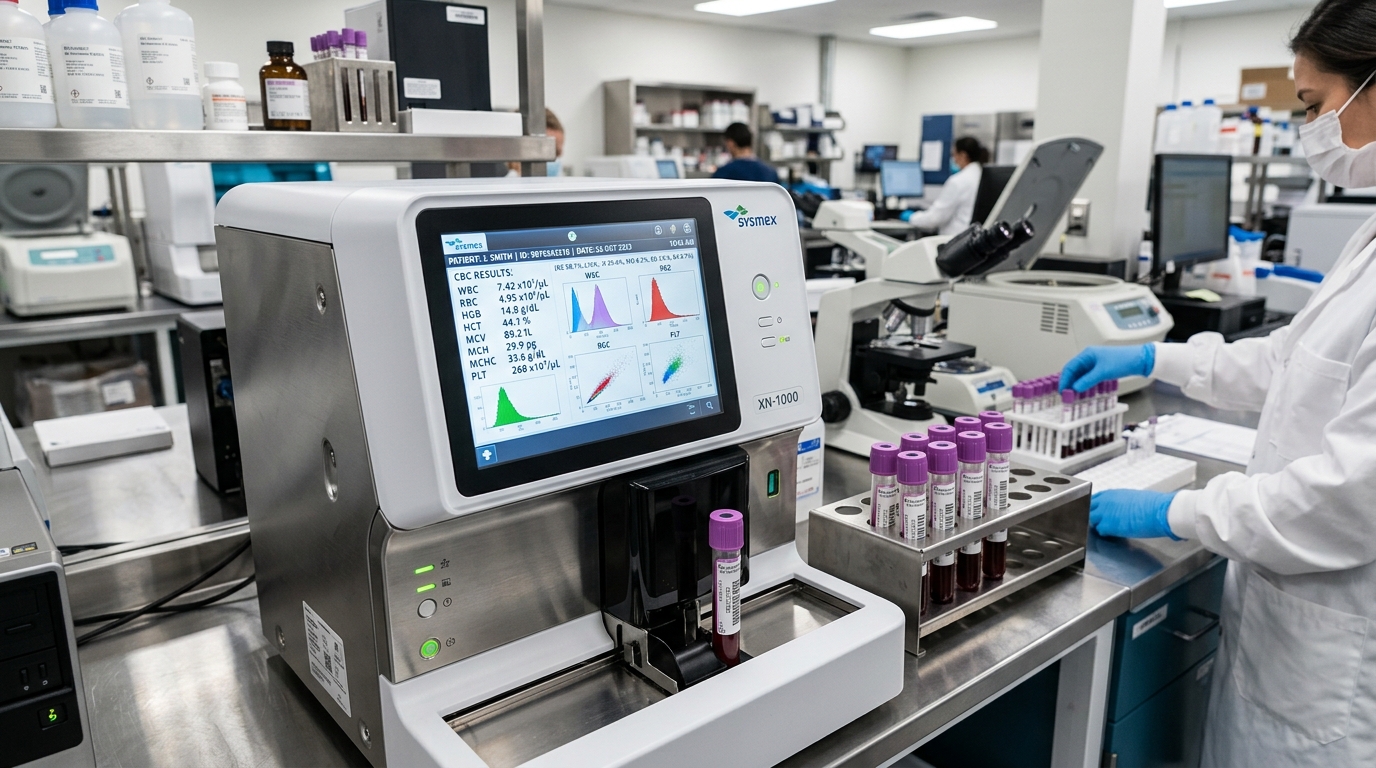
Blood is composed of approximately 55% liquid plasma and 45% formed cellular elements. An automated multi-channel hematology analyzer utilizes laser flow cytometry and electrical impedance to count millions of individual cells in a tiny 2-milliliter blood sample within seconds. The CBC report organizes these metrics into three primary cellular lineages:
- Erythrocytes (Red Blood Cells): Responsible for transporting oxygen from alveolar capillaries to peripheral tissues via hemoglobin, and returning carbon dioxide to the lungs.
- Leukocytes (White Blood Cells): The cellular army of the innate and adaptive immune systems, responsible for fighting bacteria, viruses, parasites, and clearing cellular debris.
- Thrombocytes (Platelets): Small, disc-shaped cell fragments essential for primary hemostasis, forming plugs at sites of vascular endothelial injury to stop bleeding.
Red Blood Cell (RBC) Indices & Anemia
A simple hemoglobin measurement tells your doctor if you have anemia, but red blood cell indices reveal what type of anemia is present:
- Hemoglobin (Hb): The iron-rich protein that binds oxygen. Low levels define anemia, leading to cellular hypoxia, fatigue, and breathlessness.
- Packed Cell Volume (PCV / Hematocrit): The percentage of whole blood volume occupied by red blood cells.
- Mean Corpuscular Volume (MCV): Measures the average physical size of a single red blood cell.
- Microcytic (MCV < 80 fL): Cells are abnormally small. Characteristic of Iron Deficiency Anemia, Thalassemia Minor, and Anemia of Chronic Disease.
- Normocytic (MCV 80–100 fL): Cells are normal in size. Seen in acute blood loss, hemolysis, renal failure anemia, and early systemic disease.
- Macrocytic (MCV > 100 fL): Cells are abnormally large. Characteristic of Vitamin B12 deficiency, Folate deficiency, alcoholism, and liver dysfunction.
- Mean Corpuscular Hemoglobin (MCH & MCHC): Quantifies the average amount and concentration of hemoglobin inside each red blood cell. Low values produce "hypochromic" (pale) red cells.
- Red Cell Distribution Width (RDW): Measures the degree of variation in red blood cell size (anisocytosis). High RDW is an early indicator of iron deficiency before hemoglobin drops significantly, helping differentiate it from uncomplicated Thalassemia trait (which typically has a normal RDW).
White Blood Cells (WBC) & 5-Part Differential
Total Leukocyte Count (TLC) indicates overall immune system activation. The 5-part differential count breaks down the white blood cell population into specialized subtypes:
- Neutrophils (40%–75%): First responders against acute bacterial infections. An elevated count (neutrophilia) strongly suggests bacterial infection (such as pneumonia or appendicitis) or acute tissue trauma.
- Lymphocytes (20%–45%): Comprise T-cells, B-cells, and Natural Killer (NK) cells. Elevated lymphocytes (lymphocytosis) typically indicate acute viral infections (such as Epstein-Barr, influenza, or dengue recovery), while chronic lymphocytosis requires evaluation for lymphoproliferative disorders.
- Monocytes (2%–10%): Phagocytic cells that clear dead tissue and fight chronic infections like tuberculosis and subacute bacterial endocarditis.
- Eosinophils (1%–6%): Specialized cells involved in allergic reactions, asthma exacerbations, and parasitic helminth infections.
- Basophils (0%–1%): Release histamine and heparin in hypersensitivity reactions and inflammatory states.
Platelets (Thrombocytes) & Bleeding Health
Platelets are critical for blood clotting:
- Normal Platelet Count (1.50 to 4.50 Lakh / μL): Ensures adequate clotting without spontaneous thrombosis.
- Thrombocytopenia (Low Platelets, < 1.50 Lakh / μL): Increases bruising, petechiae, and spontaneous bleeding risks. Common causes include acute viral infections (such as Dengue or Chikungunya), immune thrombocytopenic purpura (ITP), splenic sequestration, and drug-induced bone marrow suppression.
- Thrombocytosis (Elevated Platelets, > 4.50 Lakh / μL): Reactive thrombocytosis occurs secondary to acute inflammation, iron deficiency, or major surgery. Primary thrombocytosis occurs in myeloproliferative neoplasms like Essential Thrombocythemia.
- Mean Platelet Volume (MPV): Measures platelet size; young platelets are larger and more reactive.
Master CBC Reference Ranges & Interpretation
The following table provides standard adult laboratory reference ranges and clinical significance for all major CBC parameters:
| Parameter | Standard Reference Range (Adults) | Clinical Causes for Elevated Levels | Clinical Causes for Depleted Levels |
|---|---|---|---|
| Hemoglobin (Hb) | Men: 13.0–17.0 g/dL Women: 12.0–15.5 g/dL |
Polycythemia vera, chronic COPD/smoking, high altitude adaptation, severe dehydration. | Iron deficiency, occult GI bleeding, B12 deficiency, bone marrow suppression, chronic kidney disease. |
| Total WBC Count (TLC) | 4,000–11,000 / μL | Acute bacterial infections, systemic inflammation, leukemia, physical trauma, corticosteroid therapy. | Viral infections (dengue, typhoid), autoimmune diseases, severe sepsis, bone marrow failure, chemotherapy. |
| Platelet Count | 1.50–4.50 Lakh / μL | Reactive inflammation, iron deficiency anemia, post-splenectomy, myeloproliferative disorders. | Dengue viral fever, ITP, liver cirrhosis with hypersplenism, aplastic anemia, medication toxicity. |
| Mean Corpuscular Volume (MCV) | 80.0–100.0 fL | Macrocytic anemia: Vitamin B12 deficiency, folate deficiency, chronic alcoholism, hypothyroidism. | Microcytic anemia: Iron deficiency, Thalassemia trait, sideroblastic anemia, chronic lead toxicity. |
| Red Cell Distribution Width (RDW-CV) | 11.5%–14.5% | Anisocytosis: Mixed nutritional deficiencies, early iron deficiency, hemoglobinopathies. | Homogeneous red blood cell population (clinical significance rare). |
| Absolute Neutrophil Count (ANC) | 2,000–7,000 / μL | Pyogenic bacterial infections, acute myocardial infarction, ketoacidosis, intense emotional or physical stress. | Severe viral infections, drug-induced agranulocytosis, autoimmune neutropenia. |
| Absolute Eosinophil Count (AEC) | 40–400 / μL | Allergic asthma, allergic rhinitis, atopic dermatitis, intestinal helminthic parasites, drug allergies. | Acute stress, Cushing syndrome, high-dose corticosteroid administration. |
How to Read an Abnormal CBC Report
When reviewing your laboratory hemogram, clinicians assess patterns across multiple markers rather than analyzing values in isolation:
- Pattern 1: Low Hb + Low MCV + High RDW: Classic presentation of early-to-moderate Iron Deficiency Anemia. The body is producing microcytic, hypochromic cells of varying sizes due to depleted iron stores.
- Pattern 2: Low Hb + Low MCV + Normal RDW + High RBC Count: Highly suggestive of Thalassemia Minor (Trait), a genetic trait requiring hemoglobin electrophoresis rather than iron supplements.
- Pattern 3: High TLC + High Neutrophil % + Band Cells: Classic "left-shift" indicative of an acute bacterial infection requiring evaluation for antibiotics.
- Pattern 4: Low TLC + Low Platelets + Relative Lymphocytosis: Classic viral pattern frequently observed in dengue fever, viral hepatitis, or acute post-viral convalescence.
Sample Collection & EDTA Specimen Handling
A CBC test requires whole blood drawn into an EDTA (Lavender Top) tube, which acts as a calcium-chelating anticoagulant to prevent micro-clotting. The sample must be gently inverted 8 to 10 times immediately after collection to ensure homogeneous mixing. Unlike biochemical panels, CBC testing does not strictly require fasting, though it is usually collected in a fasting state during full body checkups.
Check Your Complete Blood Count (CBC) at Home
Book an automated CBC test with 5-part differential at Mission100. Painless doorstep sample collection in Delhi NCR with verified same-day digital pathologist reports.
Frequently Asked Questions
Common clinical questions answered by Mission100 physicians.
No. A standalone CBC test does not require fasting. You can eat and drink normally beforehand. However, if your doctor has ordered your CBC as part of a routine health package that includes fasting blood sugar or a lipid profile, you must observe a 10 to 12 hour overnight fast.
This article is grounded in peer-reviewed clinical literature and guidelines from leading healthcare authorities:
- [1](2024). "Haemoglobin Concentrations for the Diagnosis of Anaemia and Assessment of Severity".
- [2](2023). "Reference Leukocyte Differential Count and Evaluation of Automated Hematology Analyzers (H20-A2)".
This content is for general informational and educational purposes only and does not substitute for professional medical advice, diagnosis, or treatment. Always seek the advice of a qualified physician or certified healthcare provider with any questions regarding medical conditions or diagnostic tests.